
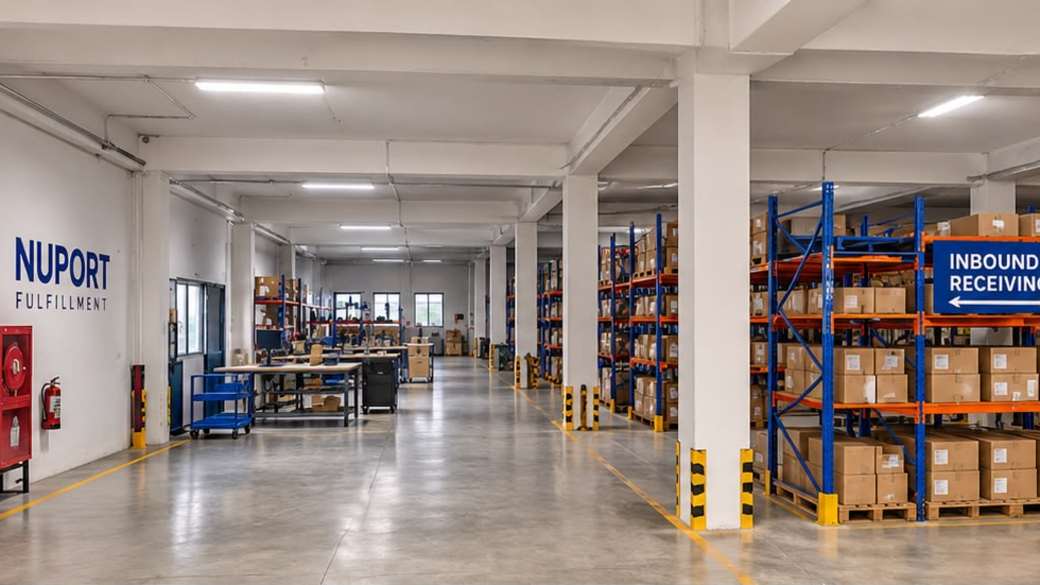
For many growing online businesses in Bangladesh, warehousing starts as a simple arrangement.
Products are stored in an office, a spare room, or a small rented space. Orders are received through social media, employees locate the products, packages are prepared, and courier companies collect the shipments.
This arrangement works when order volumes are small.
But what happens when the business starts processing hundreds or thousands of orders?
Products become harder to locate. Inventory records become inaccurate. Packing takes longer. Employees spend more time managing operations instead of helping the business grow.
This is when professional warehouse and fulfillment services in Dhaka become valuable.
In this article, we explain how warehouse fulfillment works and what businesses should consider when selecting a fulfillment center.
What Is Warehouse Fulfillment?
Warehouse fulfillment combines product storage with the processes required to prepare and dispatch customer orders.
A warehouse is primarily a facility where goods are stored.
A fulfillment center goes further by managing the operational activities that take place after an order is received.
These activities typically include:
- Receiving products from suppliers.
- Checking and recording inventory.
- Organizing products in designated storage locations.
- Processing incoming orders.
- Picking the correct products.
- Packing shipments.
- Preparing orders for dispatch.
- Updating inventory and shipment records.
The goal is to make products available and ready for delivery whenever customers place orders.
Why Do Dhaka Businesses Need Professional Warehouse Fulfillment?
Dhaka is an important operating base for many Bangladeshi e-commerce businesses.
However, managing storage and fulfillment within the city presents several challenges.
1. Limited Storage Space
As businesses introduce new products and expand their catalogues, storage requirements increase.
Small offices and informal storage facilities eventually become insufficient.
A dedicated warehouse provides a more organized environment for inventory management.
2. Difficulty Tracking Inventory
Without a proper warehouse management system, businesses often depend on spreadsheets or manual stock counts.
This makes it difficult to determine exactly how much inventory is available.
Inventory inaccuracies can lead to overselling, delayed orders, and unnecessary purchasing.
3. Slow Order Processing
When products are not organized systematically, warehouse employees spend additional time locating items.
A structured warehouse uses product identification, designated storage locations, and organized picking processes to improve efficiency.
4. Increasing Operational Costs
Maintaining a warehouse involves rent, utilities, employees, equipment, security, and technology.
Outsourcing warehousing and fulfillment may provide an alternative for businesses that do not want to manage all these resources independently.
How Does a Fulfillment Center in Dhaka Operate?
A modern fulfillment center follows a structured workflow.
Step 1: Receiving Inventory
Products arrive from manufacturers, importers, or local suppliers.
The warehouse team checks quantities and records the incoming stock.
Step 2: Product Storage
Products are assigned appropriate storage locations.
A warehouse management system can help track where each product is located.
Step 3: Order Synchronization
When customers place orders, the order management system sends the relevant information to the fulfillment operation.
Step 4: Picking and Packing
Warehouse personnel identify the products, collect the required quantities, and prepare the packages.
Step 5: Dispatch
Completed orders are organized for collection by the designated delivery partner.
Step 6: Inventory Updates
The system updates stock records to reflect dispatched products and subsequent inventory movements.
This process creates a connection between inventory, orders, and delivery operations.
What Is the Difference Between a Warehouse and a Fulfillment Center?
Although the terms are often used interchangeably, they are not identical.
| Warehouse | Fulfillment center |
|---|---|
| Primarily stores products | Stores and processes products |
| Focuses on inventory storage | Focuses on inventory and orders |
| May support bulk movement | Supports individual order processing |
| Stock movement is the main activity | Picking, packing, and dispatch are central activities |
A business that only needs long-term storage may require a warehouse.
An e-commerce business processing daily customer orders will generally need a more comprehensive fulfillment operation.
How to Choose a Warehouse in Dhaka
Before selecting a warehouse or fulfillment center, consider the following factors.
Location: Consider accessibility for suppliers, employees, and delivery partners.
Storage capacity: Make sure the facility can accommodate current inventory and expected growth.
Inventory tracking: Look for systematic product identification and stock records.
Order processing: Understand how picking, packing, and dispatch are managed.
Security: Evaluate access control, inventory protection, and facility management.
Technology: Determine whether warehouse activities are connected to an inventory and order management platform.
Pricing: Understand storage charges, handling fees, minimum commitments, and additional service costs.
For businesses operating across Bangladesh, it is also worth evaluating how the warehouse connects with delivery networks serving different districts.
Warehouse Fulfillment Beyond Dhaka
Although Dhaka is a major logistics hub, businesses may also need fulfillment and distribution coverage in other parts of Bangladesh.
Chattogram, for example, plays an important role in the country's import and distribution ecosystem.
Businesses considering 3PL Chittagong or warehouse fulfillment in Chittagong should evaluate proximity to suppliers, port-related logistics requirements, customer demand, and onward transportation.
The right warehouse network depends on where inventory enters the country and where customers are located.
How Nuport Helps Improve Warehouse and Fulfillment Operations
Nuport helps businesses connect their order management, inventory, warehouse, and delivery operations.
Rather than treating these functions as separate activities, businesses can use an integrated platform to improve operational visibility.
Nuport's technology supports:
- Centralized order management.
- Inventory tracking.
- Warehouse workflows.
- Courier coordination.
- Operational reporting.
For businesses using warehouse fulfillment services, connected systems make it easier to understand inventory movement and the status of customer orders.
Final Thoughts
A warehouse is more than a place to store products.
For an e-commerce business, it is an important part of the customer experience.
Incorrect inventory, delayed packing, and disorganized dispatch processes can affect the entire business.
Investing in structured warehouse and fulfillment operations helps businesses establish a foundation for sustainable growth.
Looking for warehouse fulfillment in Dhaka? Explore Nuport's fulfillment and supply chain solutions to understand how your business can improve inventory control and order processing.
Frequently asked questions
Talk to Nuport about your fulfillment
Tell us what you sell and how many orders you ship. We will show you how Nuport can store, pack and deliver them.


