Bangladesh's e-commerce industry would look very different today without its courier companies.
Over the last decade, thousands of entrepreneurs have started selling products online. Facebook commerce has created new businesses, D2C brands have built national customer bases, and established retailers have expanded their digital operations.
But there is one important part of this growth story that often goes unnoticed: the logistics infrastructure that makes it possible to deliver a product from a seller in Dhaka to a customer in a remote corner of Bangladesh.
Without reliable nationwide delivery networks, e-commerce would remain largely limited to customers living near the seller.
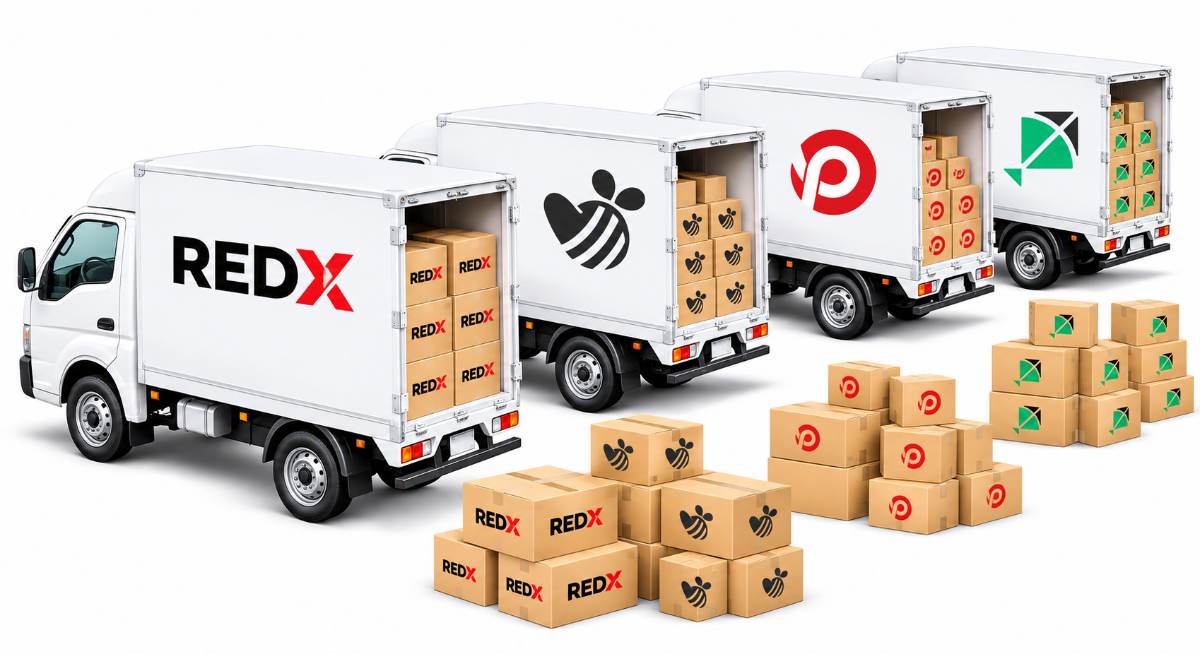
Companies such as Pathao Courier, Steadfast, REDX, and Carrybee have helped change that reality.
By building delivery networks, establishing regional operations, introducing digital parcel tracking, and supporting cash-on-delivery transactions, these companies have helped create the logistics backbone of Bangladesh's e-commerce ecosystem.
And the next stage of this evolution is about connecting these networks through technology.
The Courier Industry: The Infrastructure Behind Bangladesh's E-commerce Growth
When people talk about e-commerce, the conversation usually revolves around websites, social media marketing, payment gateways, products, and customer acquisition.
But an online transaction is only complete when the product reaches the customer.
In Bangladesh, this presents a particularly interesting challenge.
A business operating from Dhaka might receive orders from customers in Sylhet, Rangpur, Barishal, Khulna, Rajshahi, Chattogram, or smaller towns and upazilas across the country.
Building an independent delivery network to reach all these locations would be prohibitively difficult for most small and medium-sized businesses.
Courier companies solved an important part of this problem.
They invested in delivery personnel, sorting facilities, regional hubs, transportation networks, merchant platforms, and technology that allows businesses to access nationwide delivery infrastructure.
Instead of every online business building its own logistics network, merchants could outsource deliveries to specialized courier companies.
This fundamentally changed the economics of starting an e-commerce business in Bangladesh.
Four Important Courier Networks Powering Bangladesh's E-commerce Ecosystem
Several courier companies operate in Bangladesh, but four important names in the modern e-commerce delivery ecosystem are Pathao, Steadfast, REDX, and Carrybee.
Each has developed its own operational network, merchant services, technology, and delivery capabilities.
1. Pathao Courier: Making Nationwide Delivery Accessible
Pathao played an important role in bringing technology-driven transportation and delivery services into the mainstream.
Its courier business has become an important part of the e-commerce ecosystem, allowing online merchants to send products to customers across Bangladesh.
Pathao's published courier coverage includes all 64 districts, with nationwide home delivery, live parcel tracking, express delivery options in selected locations, and cash-on-delivery services.
Its courier ecosystem also supports reverse logistics, allowing businesses to manage returns and exchanges.
For merchants, the ability to access a delivery network without independently establishing local operations has made nationwide selling significantly more accessible.
Website: https://pathao.com/courier/
2. Steadfast: Building a Nationwide Merchant Delivery Network
Steadfast has developed a significant delivery network serving e-commerce merchants and businesses across Bangladesh.
Its published coverage information includes:
- 8 administrative divisions.
- 64 districts.
- 495 upazilas.
- More than 4,500 unions.
- Approximately 1,000 delivery points.
Its network combines merchant pickups, regional hubs, parcel tracking, and cash collection.
One of the important contributions of a network like Steadfast is its reach beyond major metropolitan areas.
For an online merchant, the ability to accept an order from a customer in a smaller town and arrange delivery through an established network creates opportunities that would otherwise be difficult to access.
Website: https://steadfast.com.bd/
3. REDX: Technology-Driven Last-Mile Delivery
REDX has become another major participant in Bangladesh's e-commerce logistics market.
Built around a technology-driven delivery model, REDX provides logistics services for SMEs and larger businesses.
Its published coverage includes all 64 districts and more than 490 subdistricts across Bangladesh.
The company also emphasizes parcel tracking, merchant technology, nationwide delivery, and cash-on-delivery settlement.
REDX's contribution is particularly important in connecting digital commerce businesses with a distributed last-mile delivery network.
For online brands, this means they can sell to customers outside their immediate geographic market without having to manage the delivery infrastructure themselves.
Website: https://redx.com.bd/
4. Carrybee: Expanding Delivery Access for Growing Businesses
Carrybee has also established itself as an important courier partner for Bangladesh's growing e-commerce and F-commerce businesses.
Its published services include home delivery across all 64 districts, parcel tracking, merchant management, and cash-on-delivery support.
Features such as multi-business management and flexible merchant services are particularly relevant for entrepreneurs operating multiple online stores or managing different sales channels.
Like the other major delivery networks, Carrybee helps merchants reach customers beyond their immediate operating locations.
Website: https://carrybee.com/
Nationwide Coverage: Why It Matters More Than Ever
The significance of these courier networks is not simply the number of parcels they deliver.
It is the geographic market they make accessible to businesses.
Consider a D2C brand operating from Dhaka.
Without an established courier network, selling to customers outside Dhaka would require the business to independently arrange transportation, delivery personnel, cash collection, and customer coordination.
This would make nationwide expansion difficult and expensive.
With established courier partners, the same business can accept orders from customers across the country and use existing delivery infrastructure.
The result is a much larger addressable customer market.
| Courier | Published nationwide coverage highlights |
|---|---|
| Pathao | Home delivery across 64 districts |
| Steadfast | 64 districts, 495 upazilas and 4,500+ unions |
| REDX | 64 districts and 490+ subdistricts |
| Carrybee | Home delivery across 64 districts |
Coverage does not mean identical delivery times or availability in every individual locality. Merchants should check each provider's current serviceability, pickup arrangements, and delivery terms.
Nevertheless, the collective expansion of these networks has been fundamental to the growth of digital commerce in Bangladesh.
The Next Challenge: Four Courier Networks, One Disconnected Logistics Environment
While courier companies have solved the physical delivery problem, businesses still face another operational challenge.
Managing multiple courier partners.
A growing D2C brand might use Pathao for certain locations, Steadfast for another set of deliveries, REDX for its own merchant services, and Carrybee for additional coverage or operational flexibility.
This is a sensible strategy.
Different courier providers may offer different pricing, serviceability, pickup arrangements, settlement terms, and delivery performance.
The problem emerges when each courier operates through a separate dashboard.
Employees may need to:
- Upload orders into different courier portals.
- Enter customer information repeatedly.
- Generate separate tracking numbers.
- Check delivery statuses across multiple dashboards.
- Monitor failed deliveries and returns.
- Reconcile cash-on-delivery collections.
- Prepare separate operational reports.
When a business processes a few dozen orders per day, this may be manageable.
When it processes hundreds or thousands of orders, it becomes an operational bottleneck.
More importantly, the business loses a unified view of its own logistics performance.
Why Courier Integration Is the Next Evolution of E-commerce Logistics in Bangladesh
The next stage of logistics development is not necessarily about replacing existing courier networks.
It is about connecting them.
Imagine a business receiving orders from Shopify, WooCommerce, Facebook, and other sales channels.
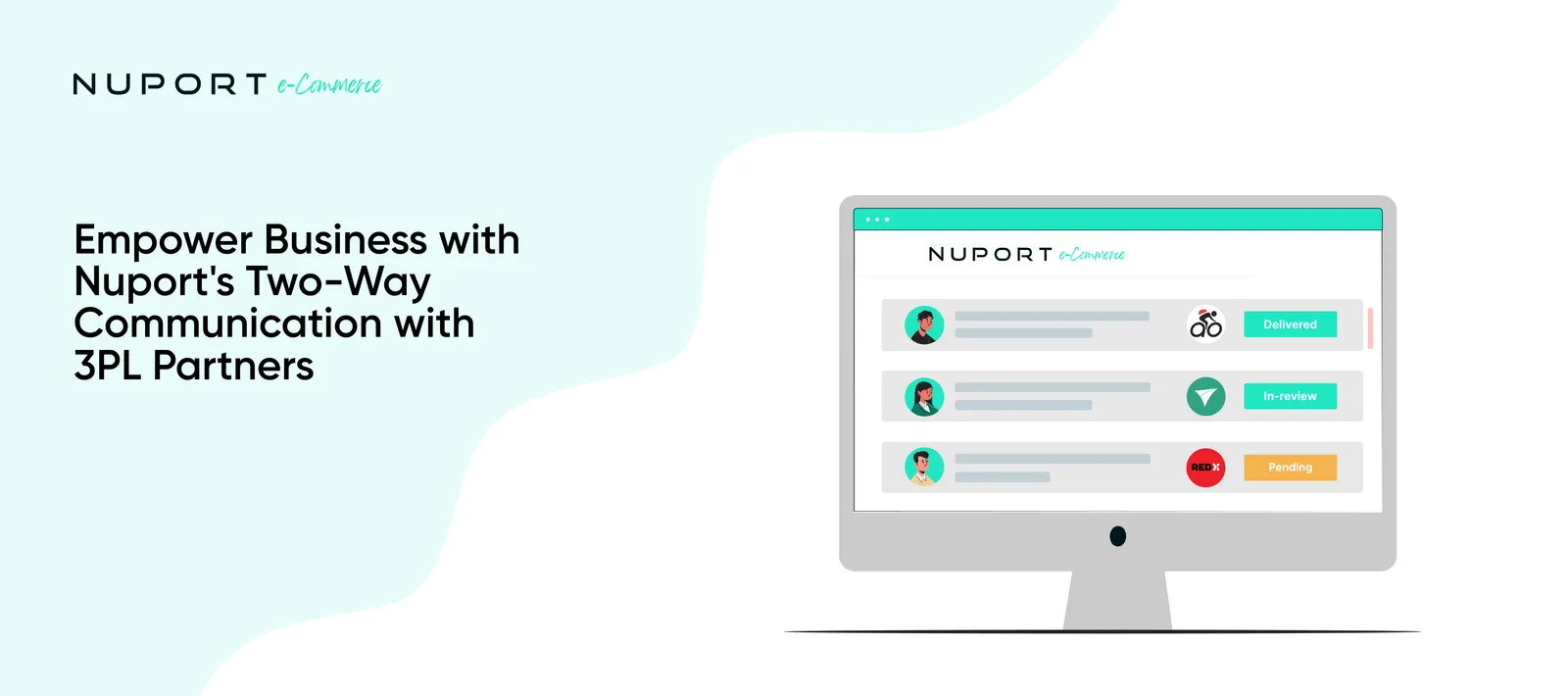
Instead of manually transferring orders into four separate courier systems, the business could manage its delivery operations through one centralized platform.
This is the idea behind integrated logistics.
A connected system should allow businesses to:
- 01Receive orders from multiple sales channels.
- 02Automatically synchronize order information.
- 03Select an appropriate courier partner.
- 04Create delivery bookings.
- 05Generate tracking information.
- 06Receive shipment status updates.
- 07Monitor failed deliveries and returns.
- 08Reconcile delivery and COD information.
- 09Analyze performance across courier partners.
The real value is not simply having four courier integrations.
It is having all the operational information available in one place.
How Nuport Is Connecting Bangladesh's Courier Ecosystem
This is where Nuport plays an important role.
Nuport's objective is to help businesses move beyond disconnected order management, inventory, and delivery systems.
Through integrations with Pathao, Steadfast, REDX, and Carrybee, Nuport connects merchant order workflows with multiple delivery networks.
Instead of treating each courier as an independent operational system, Nuport helps bring these activities into a centralized logistics environment.
1. Centralized Order Management
Orders from different sales channels can be consolidated into one system.
This reduces the need for employees to manually transfer information between platforms.
2. Multiple Courier Integrations
Businesses can access integrated courier workflows through Nuport rather than managing every delivery operation independently.
This gives merchants greater flexibility when coordinating shipments.
3. Automated Tracking Synchronization
Once a parcel is booked, delivery-related updates can be synchronized back into the central order management environment through supported integrations.
This helps businesses understand whether orders are pending, picked up, in transit, delivered, or experiencing delivery exceptions.
4. Unified Operational Visibility
When order and delivery information is connected, businesses can monitor their operations from a central dashboard.
They can evaluate delivery performance, identify operational bottlenecks, and understand how different courier partners are performing.
5. Better Data for Business Decisions
Perhaps the biggest advantage is the data itself.
Consider the information generated by thousands of daily shipments:
- Order creation time.
- Customer location.
- Product and order value.
- Courier assignment.
- Pickup time.
- Delivery attempts.
- Delivery completion.
- Return status.
- COD collection and settlement information.
When this information is scattered across different systems, it is difficult to analyze.
When it is synchronized into a unified operational platform, it becomes significantly more useful.
Businesses can start identifying delivery trends, understanding geographic demand, monitoring return patterns, and making better operational decisions.
The exact information available depends on the data exposed by each courier integration and the relevant merchant permissions.
From Courier Integration to an Integrated Logistics Environment
We believe the future of e-commerce logistics in Bangladesh will involve more than simply connecting courier APIs.
It will involve creating an interconnected operating environment.
Think about the entire lifecycle of an e-commerce transaction.
A customer places an order.
The order enters Nuport's order management system.
Inventory is checked.
The warehouse receives the fulfillment instruction.
The product is picked, packed, and prepared for dispatch.
A courier partner is selected.
The shipment is booked.
Tracking updates are synchronized.
Delivery is completed.
COD information is reconciled.
Inventory, order, and financial records are updated.
Every stage generates information.
When these stages are connected, the business gains a much clearer picture of its operations.
This is the difference between using separate logistics providers and operating an integrated logistics environment.
Why This Matters for Bangladesh's D2C and E-commerce Businesses
The benefits extend well beyond operational convenience.
For a small D2C brand, integrated courier management means fewer manual processes and better visibility.
For a medium-sized business, it means being able to manage higher order volumes without proportionally increasing administrative work.
For a large retailer, it means better coordination across sales channels, inventory locations, warehouse operations, and delivery providers.
For the wider e-commerce ecosystem, it means businesses can build on the logistics infrastructure that already exists rather than reinventing it independently.
The courier companies provide the physical network.
Technology connects the network to merchants, warehouses, inventory systems, and customers.
Both are essential.
The Future of Logistics in Bangladesh Is Connected
Bangladesh's e-commerce growth is the result of several industries developing together.
Online businesses created demand. Payment providers helped facilitate transactions. Technology companies made digital commerce easier. And courier companies built the physical infrastructure that allowed products to move across the country.
Pathao, Steadfast, REDX, and Carrybee have all contributed to making nationwide e-commerce delivery increasingly accessible.
Their networks are an important part of the country's digital commerce infrastructure.
The next opportunity is to connect these networks more intelligently.
At Nuport, we believe the future is an integrated supply chain where orders, inventory, warehouses, courier networks, and operational data work together.
Because ultimately, the objective is not just to deliver more parcels.
It is to make the entire commerce ecosystem work better.
The courier companies built the reach. Nuport is helping connect the infrastructure. Together, we can build a more integrated logistics environment for Bangladesh.
Explore Nuport's integrated e-commerce fulfillment and logistics platform at https://www.nuport.io/.
Frequently asked questions
Nuport integrates with Pathao, Steadfast, REDX and Carrybee, connecting merchant order workflows with multiple delivery networks.
Different courier providers may offer different pricing, serviceability, pickup arrangements, settlement terms and delivery performance.
Without integration, staff upload orders into separate courier portals, check statuses across multiple dashboards and reconcile COD collections by hand. An integrated platform brings this information into one place.
Each of the four couriers publishes coverage across all 64 districts. Coverage does not mean identical delivery times in every locality, so merchants should check each provider’s current serviceability.
Talk to Nuport about your fulfillment
Tell us what you sell and how many orders you ship. We will show you how Nuport can store, pack and deliver them.